
Quick Summary
Regular HVAC maintenance plays a major role in improving energy efficiency, extending equipment lifespan, and reducing unexpected repair costs. Following a consistent maintenance schedule that includes filter changes, coil cleaning, refrigerant checks, and seasonal inspections helps commercial buildings operate more efficiently year-round. At Zero Waste Solutions, Inc., we believe combining proactive facility support with smart maintenance practices helps businesses create cleaner, more reliable, and more sustainable workplaces.
Every commercial building depends on a reliable heating and cooling system to create a comfortable environment for employees, customers, and visitors. Following a commercial HVAC maintenance checklist is one of the best ways to keep equipment running smoothly throughout the year. Routine maintenance helps reduce energy waste, limits unexpected repairs, and supports better indoor air quality. A proactive approach also helps businesses avoid downtime that could interrupt daily operations.
Commercial HVAC systems work hard every day. Without regular attention, small issues can grow into expensive repairs or premature equipment replacement. A structured maintenance routine keeps each component performing as intended while helping building owners get the most value from their investment.
Why Regular HVAC Maintenance Matters
Commercial HVAC equipment represents one of the largest investments in a facility. It also accounts for a significant portion of a building's energy consumption. When the system operates efficiently, businesses often see lower utility bills and more consistent indoor temperatures.
Routine inspections also help identify worn parts before they fail. Replacing a belt or cleaning a coil during scheduled maintenance costs far less than dealing with an emergency breakdown during the hottest or coldest time of the year.
Another advantage is improved indoor air quality. Dust, pollen, mold, and other airborne particles can build up inside HVAC systems over time. Regular cleaning and filter replacement help create a healthier workplace for everyone inside the building.
Replace Air Filters on Schedule
Air filters play a major role in HVAC performance. Dirty filters restrict airflow and force the system to work harder than necessary. This added strain increases energy consumption and shortens equipment life.
Filter replacement schedules depend on the building type, occupancy levels, and environmental conditions. Facilities with higher foot traffic or dusty environments may require more frequent replacements than standard office buildings.
Fresh filters also improve indoor air quality by capturing airborne contaminants before they circulate throughout the property.
Inspect and Clean HVAC Coils
Evaporator and condenser coils naturally collect dirt over time. Even a thin layer of debris can reduce heat transfer and make the system less efficient.
Cleaning these coils allows the equipment to transfer heat more effectively. The HVAC system can then maintain comfortable temperatures without consuming unnecessary energy.
Routine coil inspections also help technicians identify corrosion or damage before larger problems develop.
Check Refrigerant Levels
Proper refrigerant levels allow cooling equipment to operate efficiently. Low refrigerant often indicates a leak somewhere within the system.
Operating with insufficient refrigerant forces compressors to work harder, increasing wear and reducing cooling performance. During scheduled maintenance, technicians inspect refrigerant pressures and look for signs of leaks before they become more expensive repairs.
Keep Drain Lines and Drain Pans Clear
Commercial HVAC systems remove moisture from indoor air during the cooling process. That moisture travels through drain lines into collection systems.
Over time, algae, dirt, and debris can clog drain lines. Blockages may cause water leaks, unpleasant odors, or mold growth inside the building.
Cleaning drain pans and flushing drain lines helps prevent water damage while supporting healthy indoor conditions.
Inspect Belts, Motors, and Moving Parts
Many commercial HVAC systems rely on belts, bearings, and motors to circulate air throughout the building.
Normal operation gradually wears these components. Loose belts, worn bearings, or poorly lubricated motors reduce efficiency and may eventually fail.
Routine inspections help identify parts showing early signs of wear. Replacing these components during planned maintenance minimizes unexpected downtime.
Verify Thermostat Performance
The thermostat acts as the control center for the entire HVAC system. Even a small calibration issue can affect comfort and increase energy costs.
Maintenance visits should include testing thermostat accuracy, reviewing programmed schedules, and confirming that all sensors communicate properly with the HVAC equipment.
Smart building controls may also require software updates or adjustments as occupancy patterns change.
Examine Electrical Components
Electrical issues often begin as small problems that become larger over time.
Maintenance inspections typically include checking electrical connections, measuring voltage, examining contactors, and inspecting capacitors for signs of wear.
Tight electrical connections reduce the chance of overheating while helping equipment operate safely and consistently.
Keep Outdoor Equipment Free of Debris
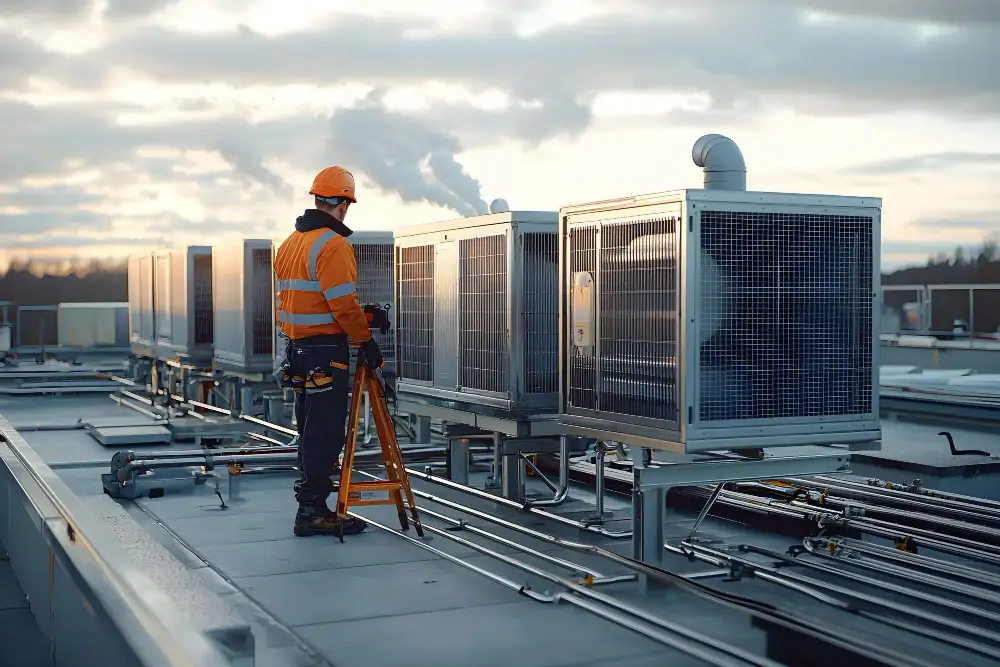
Rooftop units and outdoor condensers remain exposed to leaves, dust, pollen, and weather throughout the year.
Debris surrounding outdoor equipment restricts airflow and makes cooling systems work harder.
Keeping vegetation trimmed and removing accumulated debris allows outdoor units to reject heat more efficiently, improving overall system performance.
Inspect Airflow Throughout the Building
Balanced airflow affects both comfort and efficiency.
Maintenance should include checking vents, registers, dampers, and ductwork for blockages or damage. Poor airflow may cause certain areas of a building to feel warmer or cooler than others.
Technicians can also identify duct leaks that allow conditioned air to escape before reaching occupied spaces.
Schedule Seasonal Maintenance
Commercial HVAC equipment experiences its greatest demand during extreme weather.
Spring inspections prepare cooling systems before summer temperatures arrive. Fall maintenance focuses on heating equipment before colder weather begins.
Seasonal inspections help reduce the likelihood of unexpected failures during peak operating periods while giving technicians time to address minor repairs.
Many businesses benefit from developing a commercial HVAC maintenance plan that schedules these inspections throughout the year rather than waiting until problems appear.
Keep Detailed Maintenance Records
Documenting every inspection, repair, and equipment upgrade creates valuable maintenance history.
Accurate records help facility managers identify recurring issues, monitor equipment performance, and make informed replacement decisions.
Maintenance documentation may also support warranty claims and demonstrate compliance with building management requirements.
Partner With Experienced Facility Support Professionals
HVAC systems perform best when maintenance becomes part of a broader building management strategy.
Facility support teams often coordinate HVAC inspections alongside janitorial services, waste management, recycling programs, and other operational responsibilities. This integrated approach helps buildings run more efficiently while reducing operational disruptions.
Organizations looking for commercial HVAC maintenance services should look for experienced professionals who understand commercial facilities and develop maintenance schedules based on each property's unique operational needs.
Supporting Better Facility Operations
At Zero Waste Solutions, Inc., we understand that efficient buildings depend on more than waste management alone. Our facility support services help commercial properties maintain organized, productive, and sustainable operations. Alongside our waste management, recycling, and facility support solutions, we work with businesses to simplify daily operations while supporting long-term efficiency goals.
A well-maintained HVAC system contributes to lower operating costs, greater occupant comfort, and improved equipment reliability. When preventive maintenance becomes part of your overall facility management strategy, your building is better positioned to perform consistently throughout every season. We believe thoughtful planning today leads to stronger operational performance tomorrow, helping businesses create cleaner, more efficient workplaces for years to come.
FAQs
How often should a commercial HVAC system be maintained?
Most commercial HVAC systems should be inspected at least twice a year, typically in the spring and fall. Buildings with high occupancy or specialized equipment may benefit from more frequent service to keep the system operating efficiently throughout the year.
What are the signs that a commercial HVAC system needs maintenance?
Common warning signs include uneven temperatures, rising energy bills, unusual noises, weak airflow, unpleasant odors, or equipment cycling on and off more often than normal. Addressing these issues early can help prevent larger repairs.
Why should businesses invest in routine commercial HVAC maintenance?
Routine maintenance helps reduce unexpected breakdowns, lower energy costs, improve indoor air quality, and extend the lifespan of HVAC equipment. It also supports a more comfortable environment for employees, customers, and visitors while helping businesses avoid costly interruptions.
